

When planning your dream modular kitchen, you may hear designers talk about the “Golden Kitchen Triangle Rule”. It’s not a fancy decoration style or a trend that will fade away, it’s a smart kitchen layout principle that makes cooking easier, faster, and more enjoyable.
In simple words, the Golden Kitchen Triangle connects your sink, hob/stove, and refrigerator in a triangular layout so that you can move between them easily without bumping into obstacles.
This blog will explain:
- What the Golden Triangle Rule is
- Why it matters in an Indian home kitchen
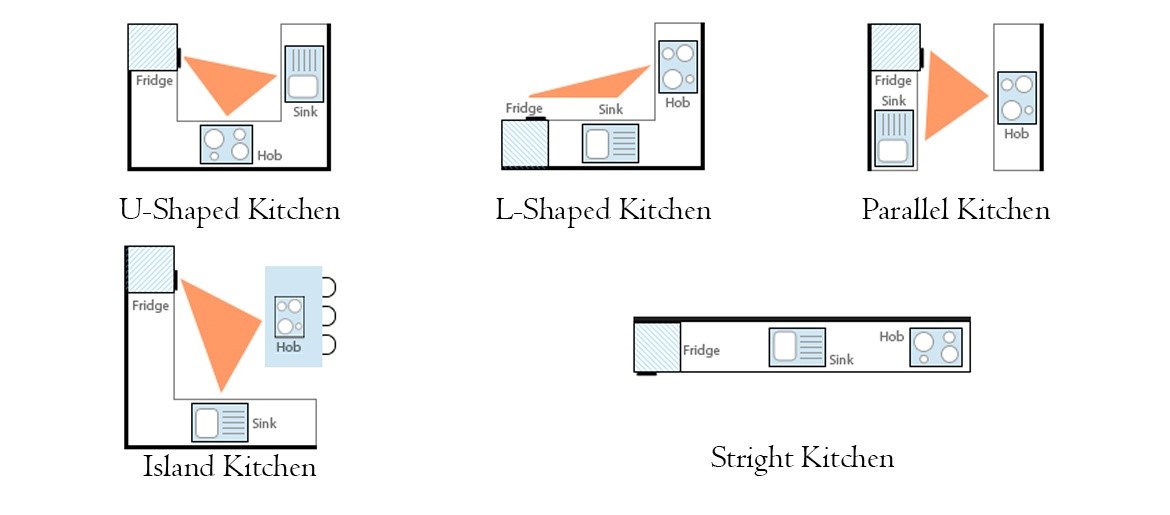
- How to apply it for L-shaped, U-shaped, parallel, and island modular kitchens
- Common mistakes to avoid
- Expert tips to combine beauty with function
Understanding the Golden Triangle Rule
The Golden Triangle concept comes from kitchen ergonomics. It’s all about minimising effort and maximising comfort. According to the rule:
- The three key points of your kitchen (sink, stove, fridge) should be placed in a triangle shape.
- The distance between each point should ideally be between 4 to 9 feet.
- The total perimeter of the triangle should be 13 to 26 feet for the best workflow.
Why these points?
Because these are the three most-used spots in any kitchen:
- The fridge for storing ingredients
- The sink for washing
- The stove/hob for cooking
When these are close enough but not cramped, cooking feels smooth and effortless.
Why the Golden Triangle is Important for Indian Kitchens
In Indian households, cooking often involves:
- Multiple dishes at once
- Frequent washing of vegetables and utensils
- Quick access to masalas, oils, and fresh ingredients
If your kitchen layout forces you to take too many steps or turn around awkwardly, you waste energy and time. The Golden Kitchen Triangle Rule helps you:
- Save time when cooking multiple meals
- Avoid clutter by having a clear movement path
- Reduce back strain and unnecessary bending or twisting
- Make the kitchen safer, especially when handling hot vessels
Applying the Golden Triangle Rule in Different Modular Kitchen Layouts
The good thing is – the Golden Kitchen Triangle works for all kitchen layouts. Let’s see how.
1. L-Shaped Modular Kitchen
- Place the sink on one arm of the L, the stove on the other arm, and the fridge at the end.
- Ensure no corner cabinets block movement.
2. U-Shaped Modular Kitchen
- The sink in the middle section, stove on one side, and fridge on the opposite side.
- This creates a perfect, compact triangle.
3. Parallel (Galley) Modular Kitchen
- Place the sink and stove on one counter, and the fridge directly opposite.
- Maintain a 3-4 ft gap between counters for easy turning.
4. Island Modular Kitchen
- The sink or stove can be on the island, with the other two points placed strategically on the main counter.
- Works best in open kitchen designs.
Common Mistakes to Avoid
Even when you know the Golden Triangle Rule, these errors can spoil the design:
- Placing points too far apart – makes cooking tiring.
- Cluttering the triangle with furniture or shelves – breaks the workflow.
- Ignoring ventilation – important for Indian kitchens with heavy cooking.
- Not considering electrical points – may cause you to adjust appliances incorrectly.
Golden Triangle + Storage = Perfect Modular Kitchen
While the Golden Triangle focuses on movement, storage planning is equally important. For example:
- Keep utensil drawers near the stove.
- Store cutlery near the sink.
- Have a pantry cabinet near the fridge for dry goods.
This creates a secondary efficiency layer in your kitchen design.
Golden Triangle in Small Indian Kitchens
If you live in a city apartment, your kitchen may be compact. The Golden Triangle can still work:
- Keep distances on the lower side (4-5 feet).
- Use vertical storage to free up counter space.
- Install sliding drawers for easier access to utensils and groceries.
Expert Tips for a Smart Modular Kitchen in India
- Use soft-close drawers for smooth operation.
- Choose heat-resistant countertops for durability.
- Add under-cabinet lighting to make cooking easier at night.
- Go for chimneys with high suction power to handle Indian spices and frying.
How the Golden Triangle Improves Daily Life
Imagine making breakfast:
- Take milk from the fridge
- Rinse a bowl at the sink
- Heat it on the stove
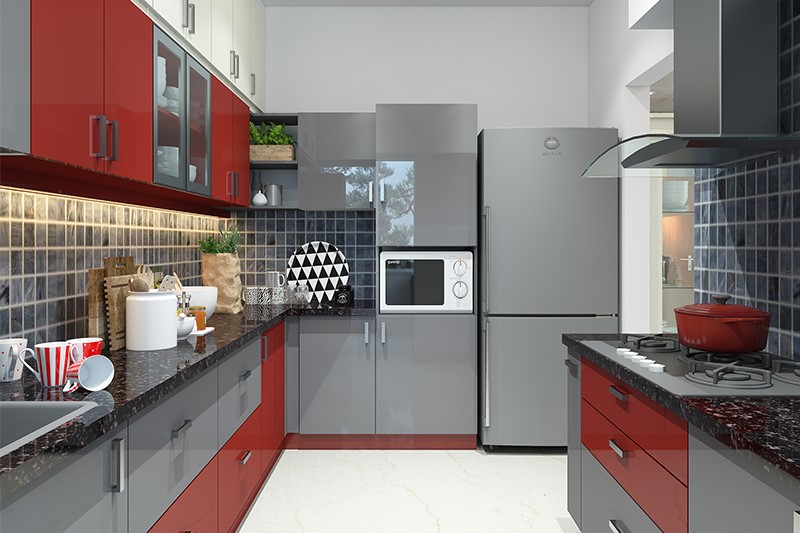
If these three are placed in the Golden Triangle pattern, you complete this process without backtracking or colliding with anyone else in the kitchen.
Designing Modular Kitchens in India
Whether you’re in Chennai, Bangalore, Coimbatore, or Erode, applying the Golden Triangle will help you design a practical, beautiful, and modern Indian modular kitchen. Many Indian modular kitchen designers already follow this principle to balance tradition with modern efficiency.
If you’re planning a kitchen renovation or a new home design, ask interior designers how they will apply the Golden Kitchen Triangle to suit your cooking style, family needs, and space availability.
Conclusion
The Golden Triangle Kitchen Rule is not just a design theory, it’s a proven method to make your cooking space more functional, comfortable, and enjoyable. By keeping your sink, stove, and fridge within easy reach while allowing enough room to move, you create a kitchen that works with you, not against you.
If you’re looking to design a custom modular kitchen in India, the Golden Kitchen Triangle should be at the heart of your plan. Our expert kitchen designers can help you create the perfect layout that blends ergonomics, style, and Indian cooking needs.